
Audit Overview
Your store's untapped revenue potential — and how to unlock it
Why We Created This Audit
We analyzed brandonblackwood.com the same way we've audited 350+ e-commerce stores — looking for the specific gaps between your current experience and what top-performing Fashion & Accessories stores deliver. Every finding in this report is a revenue opportunity backed by industry data and competitive benchmarks.
What We Analyzed
- UX & Conversion Design10 findings
- Technology & App StackPlatform + 23 apps
- Industry BenchmarksFashion & Accessories
Pages Analyzed
- Homepage4 findings
- Collection Pages2 findings
- Product Pages (PDP)4 findings
- Cart & Checkout2 findings
 This audit was prepared by Growisto — a CRO-led Website development team behind 167% conversion growth for Atomberg, 46% CR lift for TyresNmore, and 350+ e-commerce projects.
UX & Conversion Findings
Page-by-page analysis with visual comparisons against top Fashion & Accessories stores
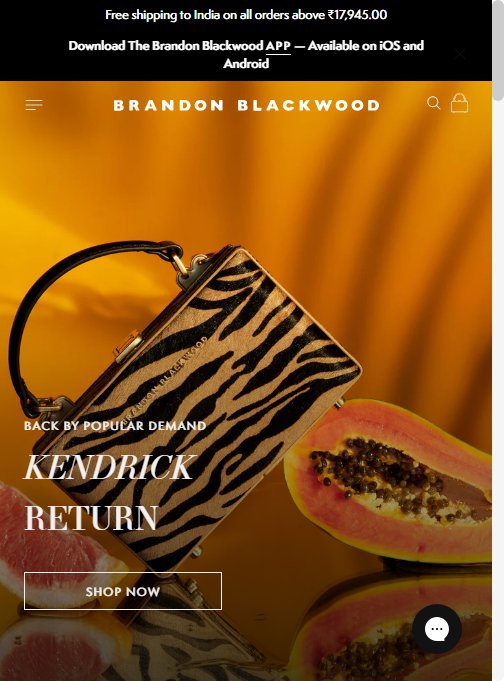
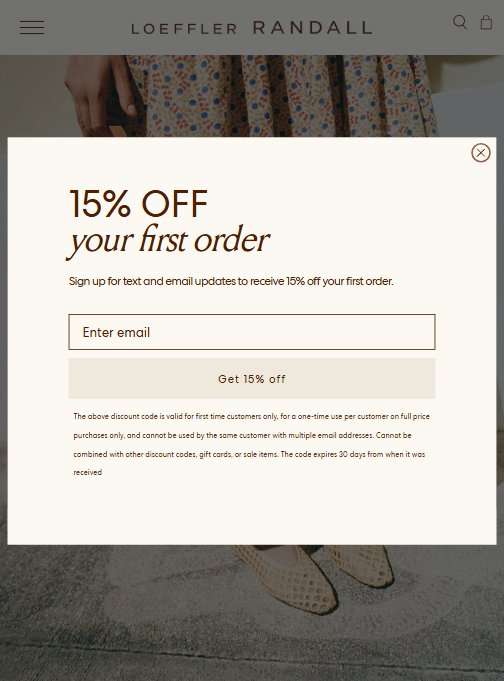
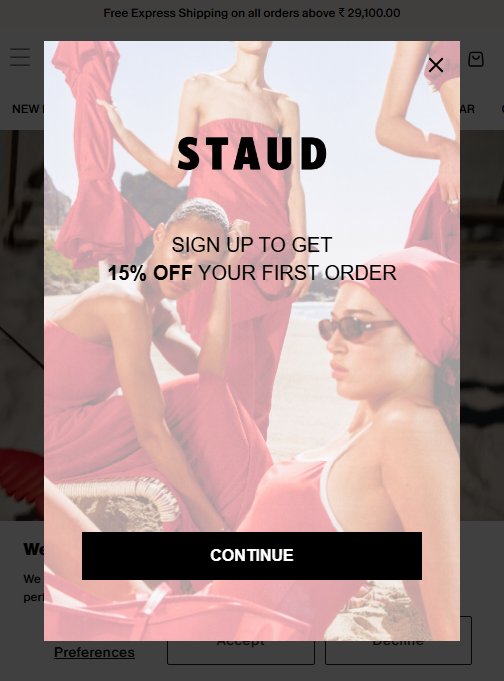
- Klaviyo (company_id detected) is fully loaded with signup forms bundle — the infrastructure is live
- Attentive (cdn.attn.tv/brandonblackwood/dtag.js) is also installed for SMS capture — neither channel is activated on first visit
- After 8+ seconds on the homepage, no popup, slide-in, or overlay of any kind appears
- The sole email capture is a Klaviyo form in the footer (form-UF6Be6) — a small input field with only an arrow button, requiring full-page scroll to find
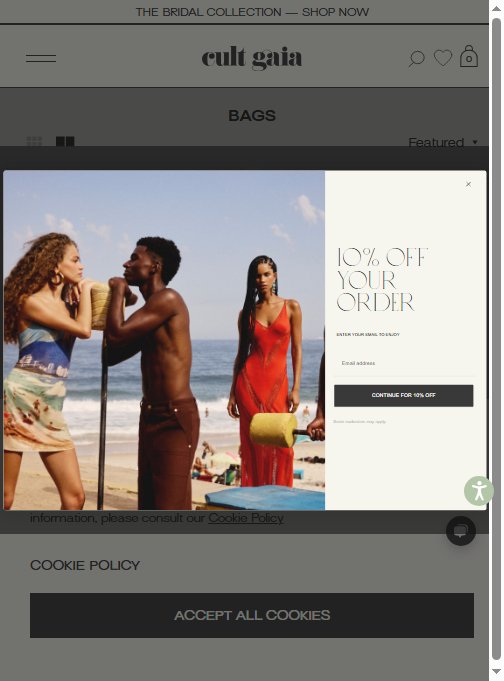
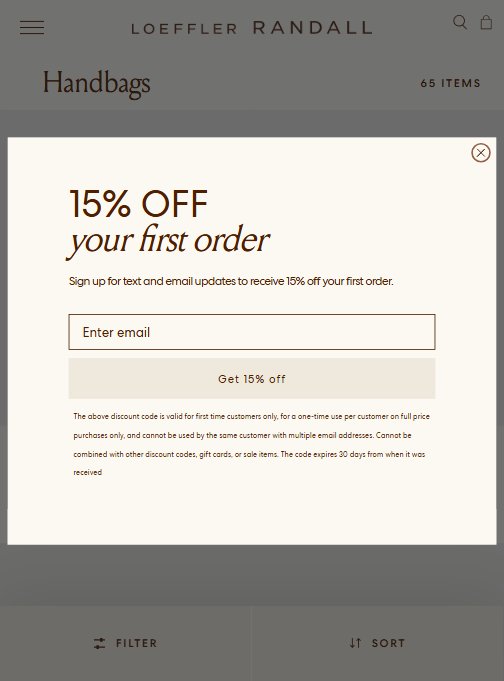
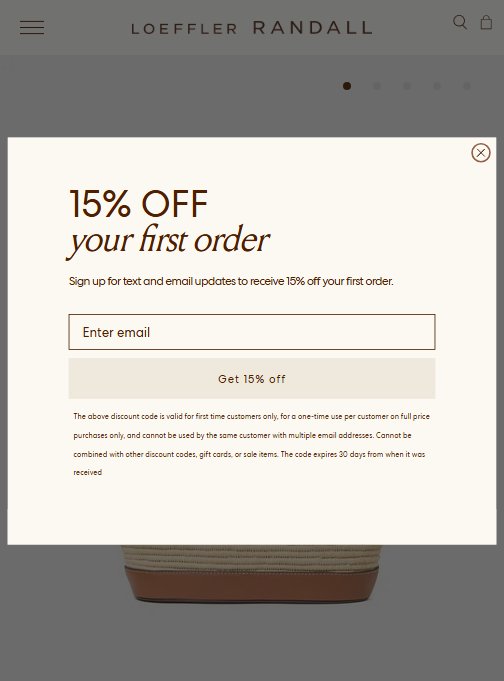
- Loeffler Randall fires a full-screen '15% OFF your first order' Klaviyo popup instantly; Staud shows 'GET 15% OFF' within 3 seconds
- Activate a Klaviyo timed popup (8–12 sec delay) or exit-intent popup offering a first-order discount — 10-15% off is standard for this price range
- Add a two-step email + SMS flow: Attentive SMS opt-in first, then Klaviyo email — fashion brands with dual-capture see 2.5x the list growth rate
- A/B test exit-intent vs. timed trigger — exit-intent typically outperforms for fashion by 15–22% on mobile
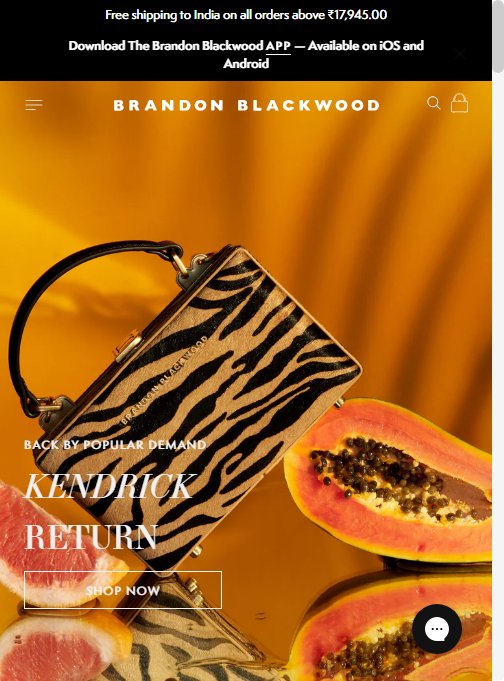
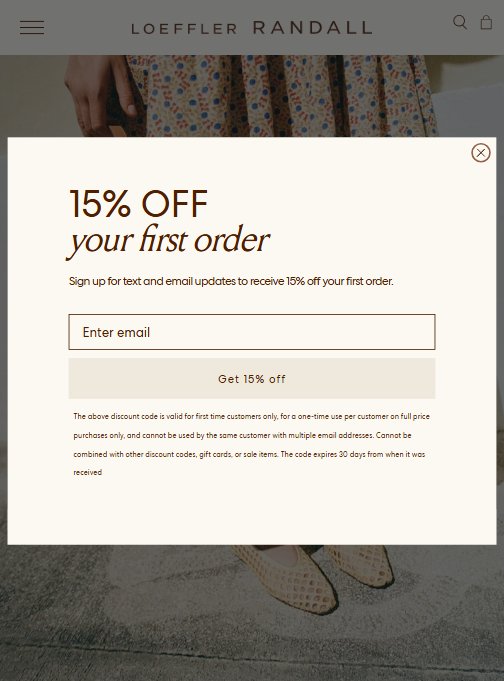
- CSS computed value for header element: position: absolute — confirmed via DOM inspection
- Once a user scrolls past the first viewport height, all navigation links, search icon, and cart bag icon are gone
- On mobile (the majority of Brandon Blackwood's social-driven traffic), this means tapping cart requires scrolling all the way back to the top
- Every competitor audited (Staud, Cult Gaia, Loeffler Randall) uses position: fixed or sticky for their header
- Studies show sticky headers reduce cart abandonment by 10–14% by keeping the 'bag' CTA permanently in view
- Update header CSS to position: sticky; top: 0; z-index: 100 — this is a single-line CSS change with immediate impact
- On scroll-down, transition to a slimmer sticky bar (collapse announcement bar, keep logo + cart + search) to maximise content area
- Add a persistent cart item count badge so the bag icon communicates progress at all times
- Live announcement bar content confirmed: 'Download The Brandon Blackwood APP — Available on iOS and Android' and 'BB x Olandria Collab Coming Soon! Sign Up HERE'
- No free shipping threshold is communicated in the bar (US threshold not displayed at all)
- No current promotion or discount offer in the bar
- No loyalty points or rewards reminder (despite Yotpo Loyalty and Rise.ai both being installed)
- Fashion industry benchmark: 9/10 brands use the announcement bar to display shipping threshold + at least one promotional message
- Replace or supplement existing messages with: (1) Free shipping threshold for US, (2) current season sale or new arrivals, (3) loyalty/rewards reminder
- Keep the collab/app message as one of 3–4 rotating slides — don't remove brand news, but don't let it dominate
- For the US market, display 'Free US Shipping on orders $X+' as the first slide — studies show this alone reduces cart abandonment by 8–12%

- DOM inspection of the full homepage finds no element with class names containing 'press', 'as-seen', 'media-coverage', or 'featured-in'
- The brand has documented celebrity clients and fashion press coverage but none is surfaced on the homepage
- Hero text focuses on product restock ('KENDRICK RETURN — BACK BY POPULAR DEMAND') with no brand credibility layer
- For contemporary luxury bags at $200–$350, editorial validation is a key purchase trigger — buyers want to see the bag on people they recognise
- Staud and Cult Gaia both surface editorial and influencer imagery prominently in the first two scrolls
- Add a 'As Featured In' strip with 5–7 publication logos (Vogue, Harper's Bazaar, Elle, etc.) with links to actual coverage
- Add a 'Celebrity / Community' section with styled editorial photos showing the bags in context
- Place the press section within the first 3 scrolls — ideally between the hero and the featured product grid

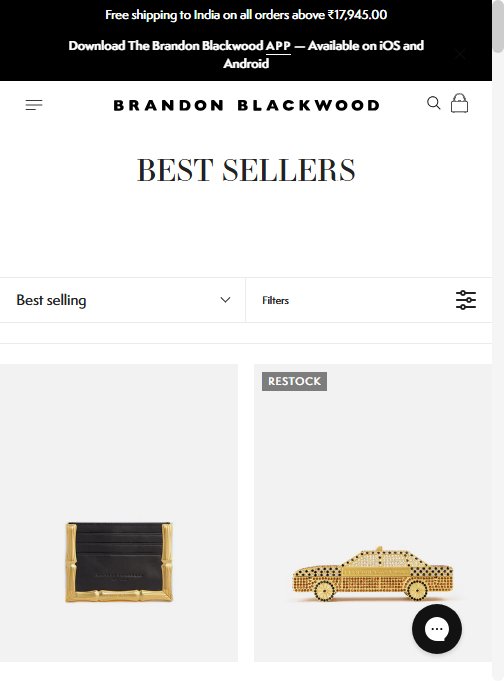
- The Best Sellers collection shows SOLD OUT labels across multiple products — visible in the collection grid via DOM text content
- SOLD OUT items are not suppressed to the end of the grid; they occupy positions mixed with in-stock items
- No 'Notify Me', 'Back in Stock Alert', or email capture appears on any sold-out product card
- Cult Gaia surfaces an 'ALMOST SOLD OUT' filter in its collection sidebar — turning scarcity into a feature rather than a frustration
- Industry standard: OOS products should either be pushed to page end or removed from collection, with a back-in-stock capture mechanism
- Use Globo Filter (already installed) to push SOLD OUT items to the end of the collection grid automatically
- Add a back-in-stock email notification button on OOS product cards — a simple 'Notify Me' email form can recover 15–25% of lost demand
- Display an 'Only X left' label on near-sold-out items to drive urgency for in-stock products
- DOM inspection of the collection page confirms reviewsOnCards = 0 — Yotpo reviews are loaded on PDPs but not surfaced in collection cards
- Yotpo Reviews app is installed and active (reviews visible on PDP with 5-star aggregate) but the Yotpo collection-card widget is not enabled
- Fashion brands with review stars on collection cards see 12–18% higher PDP click-through rates compared to cards without ratings
- Loeffler Randall and Staud both show star ratings on collection cards, creating immediate confidence before the click
- Enable Yotpo's collection-page star widget — this is a one-click toggle in the Yotpo dashboard, requiring no development work
- Minimum threshold: only show stars when a product has 3+ reviews to avoid displaying low-count ratings
- Prioritise showing review count alongside stars (e.g., '4.8 ★ (42)') — the count amplifies trust more than the score alone
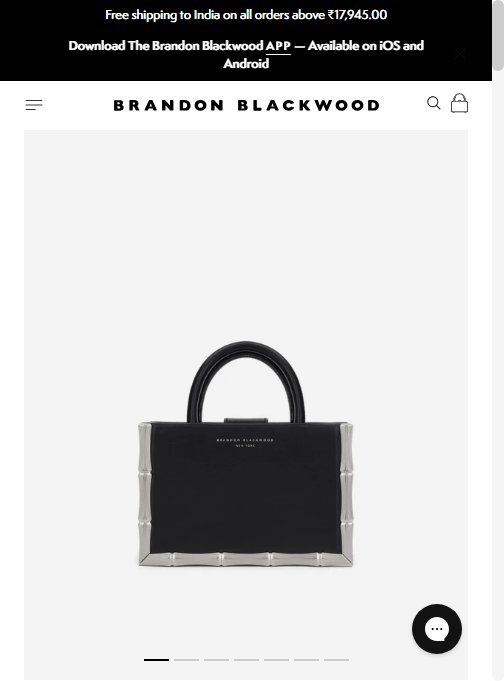
- DOM analysis of the ATC zone: product name, price, colour selector, and 'ADD TO BAG' button — nothing else in the immediate vicinity
- No 'Free shipping over $X', 'Free returns', 'Ships in X days', or security badge appears near the ATC button
- The only shipping mention found on the entire PDP is for India (₹17,945 threshold via LangShop) — US visitors see no shipping information
- Loeffler Randall places a 'Shipping and Returns' accordion section directly below the ATC, answering the buyer's top post-click concerns inline
- Fashion brands that add shipping + return info within the ATC zone see 8–14% higher add-to-cart rates
- Add 2–3 trust micro-copy lines directly below the ATC button: 'Free US shipping on orders $X+' | 'Easy 30-day returns' | 'Designed in New York City'
- Add a collapsible 'Shipping & Returns' accordion section on all PDPs — content already exists on the site, it just needs to be surfaced inline
- Consider adding small trust icons (free shipping, secure checkout, returns) as icon+text rows beneath the ATC — 40px tall, minimal visual weight
- DOM scan of Brandon Blackwood PDPs: 0 Klarna, Afterpay, Affirm, or Sezzle elements found anywhere on the page
- The price range ($110–$350+) is the sweet spot for BNPL: high enough that a 4×$75 split feels meaningfully easier, low enough that approval rates are near-universal
- Cult Gaia uses Klarna at a similar ($228–$598) price point — the Klarna JS is loaded and placement elements exist in the DOM
- Staud and Loeffler Randall both surface payment method icons at checkout but no BNPL on PDP
- Shopify Payments supports Shop Pay Installments natively — this could be activated with zero third-party app cost
- Activate Shop Pay Installments (already available via Shopify Payments) on all PDPs — shows 'Pay in 4 interest-free installments of $X' as a text widget below the price, zero development needed
- If higher AOV is a priority, layer Klarna or Afterpay on top for the broader recognition these brands bring
- Display the instalment amount in the price area ('or 4 × $X with Shop Pay') — studies show this placement alone increases ATC rate 10–18% on items $150+


- DOM inspection of the Bamboo B Tote PDP: crossSellCount = 0 — no related products, recommendations, or complementary items section exists
- The ShopTheLook app (shopthelook.app) is installed on the store but not activated on individual PDPs
- The cart page does show a 'YOU MAY ALSO LIKE' section, but this fires too late (after the purchase decision, not during it)
- Loeffler Randall surfaces 4 cross-sell products on every PDP — handbag PDPs show complementary footwear and accessories
- Fashion brands with PDP cross-sell see 15–22% higher AOV compared to those without — particularly effective when showing complementary categories
- Enable ShopTheLook (already installed) to show curated outfit pairings on bag PDPs — link bags with footwear and apparel from the same collection
- Add a 'Complete the Look' or 'Pair with' section below the product description showing 3–4 complementary items from different categories
- Alternatively, use Cart-Bot (already installed) to show cross-sell recommendations in the slide-out cart when a bag is added
- DOM inspection: no fixed-position element containing an ATC button found on the Brandon Blackwood PDP
- PDP has 14 product images plus full product description, dimensions, and care guide — estimated 4–5 scrolls on mobile before reaching the review section
- Loeffler Randall uses a sticky bottom panel ('swatch-elements-wrapper fixed-modal-bottom') that keeps the colour selector and ATC accessible as users scroll
- Research shows sticky ATC bars increase add-to-cart rate by 8–15% on mobile for pages with more than 3 scrolls of content
- The existing cart notifications element is fixed-position but only appears after an item is added — a sticky ATC bar is needed before that step
- Add a slim sticky bottom bar that appears after the user scrolls past the original ATC button, containing: product name + selected variant + price + 'ADD TO BAG'
- On mobile, this bar should be full-width at the bottom of the screen — 56–64px tall — matching the platform's existing colour palette
- Trigger the sticky bar only after 300px of scroll to avoid visual conflict with the hero ATC
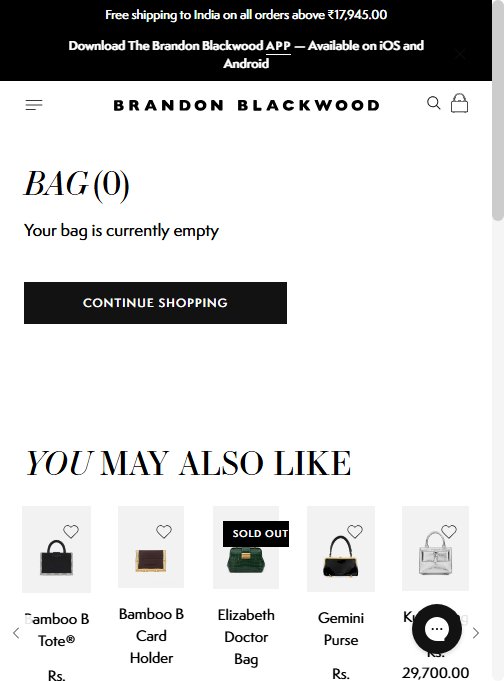
- Live cart page DOM confirms: 'Elizabeth Doctor Bag — SOLD OUT', 'Nia Bag — SOLD OUT' appear in the 'YOU MAY ALSO LIKE' row
- A customer who clicks a sold-out recommendation reaches a dead-end PDP with no ATC option and no back-in-stock capture
- This is likely a misconfigured recommendation source — the cart cross-sell is pulling from a collection that includes OOS items
- The Cart-Bot app is installed and configured for this cross-sell but lacks an in-stock filter rule
- Recommendation engines should always filter to in-stock variants as a baseline rule
- Add an in-stock filter to the Cart-Bot recommendation feed — exclude any products where all variants are sold out
- Configure the recommendation source to pull from the Best Sellers or New Arrivals collection with an inventory > 0 filter
- Add 'Back in Stock' email capture to sold-out PDP pages as a secondary recovery mechanism
- The cart page body text confirms a free shipping threshold exists (₹17,945 for India via LangShop) but no visual progress bar is displayed
- No US free shipping threshold is communicated anywhere visible in the cart for US visitors
- progressBarPresent = false in DOM — no element with class containing 'progress', 'free-shipping-bar', or 'cart-goal' found
- BOGOS (Secomapp) is installed and can render cart goals and progress bars — this feature is not activated
- Brands with cart progress bars see 8–15% higher AOV as shoppers add low-cost items (accessories, cardholders) to reach the threshold
- Activate a free shipping progress bar using BOGOS or the Cart-Bot app (both already installed) — shows 'You are $X away from free US shipping'
- Set the trigger message to appear as soon as the cart is not empty, not just near the threshold — awareness from the first item drives incremental additions
- Suggest specific add-on products to bridge the gap: 'Add a Bamboo Cardholder ($45) to unlock free shipping' — increases both AOV and cross-sell rate
Performance & Technology
Core Web Vitals, page-speed signals, and the technology stack powering Brandon Blackwood
Core Web Vitals
Technology Stack
Performance & Technology Assessment
Mobile performance is needs work (—/100); desktop is needs work (—/100) on Shopify. Page-speed and Core Web Vitals are increasingly load-bearing for SEO and conversion in this category — addressing the weakest vital first is the single highest-leverage technical improvement available.
PageSpeed vs Competitors
| Site | Mobile | Desktop |
|---|---|---|
| This site | — | — |
| Staud | — | — |
| Cult Gaia | — | — |
| Loeffler Randall | — | — |
Confidential — Prepared for Brandon Blackwood by Growisto | May 2026
App Ecosystem
What's installed vs what's missing from best-in-class Fashion & Accessories stores
Present (23)
Missing (4)
App Stack Assessment
Brandon Blackwood has a well-stocked app ecosystem with 20+ tools installed. The gap is not in installed apps but in activated features — Klaviyo popup, ShopTheLook PDP sections, Yotpo collection stars, and BOGOS progress bars are all installed but not deployed. The primary opportunity is activation, not acquisition.
Confidential — Prepared for Brandon Blackwood by Growisto | May 2026